

Introduction
Dimethyltryptamine, commonly known as DMT, is one of the most widely discussed psychedelic compounds in modern drug research and popular culture. Often described as producing exceptionally vivid changes in perception and consciousness, DMT has attracted interest from neuroscientists, historians, anthropologists, and the general public.
Click here to Buy dmt online
However, the term “DMT” is sometimes used loosely online to describe several different substances. There are also naturally occurring compounds and synthetic tryptamine analogues that are chemically related to DMT but can produce substantially different effects.
Understanding these differences is important. Two compounds may belong to the same chemical family while having different durations, subjective effects, risks, pharmacology, and legal classifications.
This article provides an educational overview of DMT, 5-MeO-DMT, bufotenine, DMT analogues, and other related tryptamines, explaining their general characteristics and reported effects without providing instructions for preparation, extraction, dosing, or consumption.
What Is DMT?
DMT stands for N,N-dimethyltryptamine. It is a naturally occurring psychedelic tryptamine that has been identified in a variety of plants and has also been detected in animals.
Chemically, DMT belongs to the tryptamine family. Tryptamines share structural similarities with serotonin, an important neurotransmitter involved in mood, perception, cognition, and numerous physiological processes.
DMT’s psychedelic properties are primarily associated with its interaction with serotonin receptors, particularly the 5-HT2A receptor.
The experience associated with DMT can be dramatically different from ordinary waking consciousness. Reports frequently describe intense visual imagery, altered perceptions of time and space, unusual thought patterns, emotional intensity, and a temporary disruption of the normal sense of self.
The Different Meanings of “DMT”
When people search for “different types of DMT,” they may actually be referring to several different categories.
These include:
- N,N-Dimethyltryptamine
- 5-MeO-DMT
- Bufotenine
- DMT-containing plant preparations
- Synthetic DMT analogues
- Other substituted tryptamines
Although these compounds are chemically related, they should not be treated as interchangeable.
1. N,N-Dimethyltryptamine
N,N-DMT is the compound most people mean when they simply use the term “DMT.”
It is particularly known for its extremely rapid psychedelic effects when it reaches the brain through routes that allow rapid absorption.
Reported effects
People who have experienced DMT commonly describe:
- Extremely vivid visual imagery
- Geometric patterns
- Changes in colors and perceived shapes
- Altered perception of time
- Distorted spatial awareness
- Intense emotional experiences
- Changes in the perception of one’s body
- A temporary alteration of one’s sense of identity
- Experiences interpreted as mystical or spiritual
Some individuals report encounters with seemingly autonomous beings or entities. These experiences are subjective and are not evidence that such entities objectively exist.
Duration
One characteristic that distinguishes DMT from many classic psychedelics is its relatively short duration when administered in ways that produce rapid absorption.
The experience may begin very quickly and can become intense within a short period. The primary effects generally resolve much faster than those of substances such as LSD or psilocybin.
Nevertheless, a short duration does not necessarily mean a low-risk experience.
2. 5-MeO-DMT
5-MeO-DMT, or 5-methoxy-N,N-dimethyltryptamine, is a different compound from ordinary N,N-DMT.
It is sometimes called “five-meo” or “the toad psychedelic” because of its association with secretions from certain species of toad. However, 5-MeO-DMT can also be produced synthetically.
Despite its chemical similarity to DMT, its subjective effects can be substantially different.
Reported effects of 5-MeO-DMT
Descriptions commonly include:
- Powerful alterations of consciousness
- Reduced or absent visual imagery compared with N,N-DMT
- Strong changes in the sense of self
- Feelings of unity or ego dissolution
- Intense emotional experiences
- Altered perception of bodily boundaries
- Experiences described as mystical or transcendent
Some users describe 5-MeO-DMT as less visually elaborate than N,N-DMT but more overwhelming in terms of changes to consciousness and self-perception.
Individual experiences vary considerably.
Why 5-MeO-DMT Should Not Be Confused With DMT
The similar names can cause confusion, but these are distinct chemicals.
N,N-DMT is strongly associated with intense visual phenomena, while 5-MeO-DMT is frequently associated with profound changes in self-awareness and consciousness.
Their pharmacology is also not identical.
Consequently, information about one compound should not automatically be applied to the other.
3. Bufotenine
Bufotenine, also known as 5-hydroxy-DMT, is another naturally occurring tryptamine.
It is structurally related to both DMT and 5-MeO-DMT.
Bufotenine has been identified in various plants and animals and has a long history of scientific and ethnobotanical interest.
Its pharmacological profile differs from that of N,N-DMT and 5-MeO-DMT.
Reported effects
Historical and scientific reports have associated bufotenine with:
- Alterations in visual perception
- Changes in consciousness
- Psychological stimulation
- Changes in sensory perception
However, human research is considerably more limited than the growing body of research surrounding better-known psychedelics.
Because scientific evidence is limited, many claims about bufotenine found online should be treated cautiously.
4. DMT in Plant Preparations
DMT occurs naturally in numerous plants.
Historically, plants containing DMT have been used in certain traditional preparations, most notably ayahuasca, a psychoactive brew associated with Indigenous and religious traditions in parts of South America.
Ayahuasca is not simply “liquid DMT.”
Traditional ayahuasca preparations generally contain plants providing DMT alongside plants containing compounds that inhibit monoamine oxidase enzymes.
This interaction changes the way DMT behaves in the body.
Ayahuasca and DMT
When DMT is taken orally by itself, enzymes in the digestive system rapidly break it down, which prevents the compound from producing the same psychedelic effects associated with rapid delivery to the brain.
Traditional ayahuasca contains additional compounds that alter this metabolism.
As a result, ayahuasca experiences tend to last considerably longer than rapidly absorbed DMT experiences.
Reported ayahuasca effects
People may report:
- Visual imagery
- Emotional introspection
- Changes in autobiographical memories
- Altered perception of time
- Spiritual experiences
- Nausea and vomiting
- Changes in body awareness
- Intense psychological experiences
The experience can be emotionally demanding, and traditional use does not mean that the substance is medically risk-free.
5. DMT Analogues
Chemists have developed numerous compounds structurally related to DMT.
These are often called DMT analogues.
An analogue is a chemical that resembles another compound structurally but has one or more modifications to its molecular structure. magic mushrooms for sale
Even relatively small structural changes can alter:
- Potency
- Duration
- Receptor activity
- Metabolism
- Subjective effects
- Toxicological profile
This is one reason why it is dangerous to assume that every compound described online as a “DMT analogue” produces the same experience as N,N-DMT.
6. 4-AcO-DMT
4-AcO-DMT, also known as psilacetin, is a synthetic tryptamine structurally related to psilocybin and psilocin rather than being simply another form of DMT.
It has received attention because it is sometimes described online as a synthetic analogue of psilocybin.
Reported effects can include:
- Visual alterations
- Changes in mood
- Altered thinking
- Changes in perception of time
- Emotional introspection
- Mystical or unusual psychological experiences
Scientific information concerning many synthetic tryptamines remains limited compared with better-established substances.
7. 4-HO-DMT and Psilocin
4-HO-DMT, commonly known as psilocin, is the primary psychoactive metabolite associated with psilocybin mushrooms.
Psilocin is structurally related to DMT.
However, psilocin and N,N-DMT are distinct substances.
Psilocin is responsible for many of the psychedelic effects associated with psilocybin-containing mushrooms.
Reported effects
These can include:
- Enhanced colors
- Visual distortions
- Changes in thought patterns
- Emotional sensitivity
- Altered time perception
- Introspection
- Changes in the sense of self
Unlike rapidly acting DMT, psilocybin experiences generally last several hours.
8. 4-HO-MET
4-HO-MET, also known as metocin, is another synthetic tryptamine.
It has become known primarily through online psychedelic communities and research-chemical discussions.
Reported effects include:
- Visual changes
- Enhanced colors
- Pattern recognition
- Altered thinking
- Changes in emotional perception
- Time distortion
However, human scientific research on 4-HO-MET is limited.
The lack of comprehensive clinical research means that claims about its safety, therapeutic value, or long-term effects should be approached carefully.
9. 4-AcO-MET
4-AcO-MET is another substituted tryptamine related structurally to compounds such as psilocin.
It is sometimes discussed as a psychedelic research chemical.
Reported effects can include visual alterations, changes in perception, unusual thought patterns, and emotional changes.
Because controlled human research is limited, there is insufficient evidence to establish its safety profile or long-term consequences.
How DMT Compounds Affect the Brain
Classic psychedelic tryptamines interact with serotonin receptors throughout the brain.
The 5-HT2A receptor is particularly important in psychedelic experiences.
Researchers believe activation of this receptor contributes to changes in:
- Sensory processing
- Cognitive flexibility
- Perception
- Self-referential thinking
- Brain network communication
Psychedelics may temporarily alter communication between brain networks that normally operate in relatively stable patterns.
One area receiving substantial research attention is the default mode network, which is associated with self-referential processing and internal thought.
Researchers are investigating whether temporary changes in these networks could help explain phenomena such as ego dissolution and altered self-perception.
Why Experiences Differ So Much
There is no single universal psychedelic experience.
Effects can vary according to:
- Individual biology
- Mental state
- Expectations
- Environment
- Previous psychedelic experience
- Other substances
- Drug purity
- Amount of active compound
- Method of administration
This variability is particularly important when discussing unregulated substances.
A product sold under a particular name may not necessarily contain what the label claims.
Psychological Risks
Psychedelic experiences can be emotionally intense.
Potential adverse psychological reactions include:
- Panic
- Anxiety
- Paranoia
- Confusion
- Fear
- Disorientation
- Distressing hallucinations
- Temporary loss of normal self-awareness
In vulnerable individuals, psychedelic experiences may contribute to serious psychological problems.
People with certain psychiatric conditions or a personal or family history of psychotic disorders may face particular concerns.
Anyone experiencing persistent psychological symptoms after taking a psychoactive substance should seek professional medical advice.
Physical Risks
Psychedelic substances can also produce physical effects.
Depending on the compound and circumstances, these may include:
- Increased heart rate
- Changes in blood pressure
- Dizziness
- Nausea
- Vomiting
- Tremors
- Loss of coordination
The greatest risks may sometimes result indirectly from impaired judgment rather than from the pharmacological effects alone.
For example, severe disorientation can increase the possibility of falls, accidents, or other injuries.
The Importance of Drug Interactions
Some tryptamines interact with serotonin systems, while certain substances also affect enzymes responsible for drug metabolism.
This can make combinations particularly unpredictable.
Combining psychoactive substances can increase the possibility of adverse effects.
Certain combinations involving serotonergic drugs or monoamine oxidase inhibitors can present serious medical concerns.
For this reason, people should not assume that combining psychedelic substances with prescription medication, recreational drugs, or supplements is safe.
Are DMT and Related Tryptamines Addictive?
Classic psychedelics such as DMT are generally not associated with the same pattern of physical dependence seen with substances such as opioids, alcohol, or nicotine.
However, “not typically physically addictive” does not mean “completely safe.”
Repeated psychedelic use can still result in psychological problems, risky behavior, impaired functioning, or other adverse consequences.
Some individuals may also develop problematic patterns around drug use even when a substance does not produce strong physical dependence.
DMT and the “Entity” Experience
One of the most fascinating aspects of DMT discussions is the frequency with which people report encounters with apparently independent beings or entities.
Descriptions vary enormously.
Some people describe:
- Humanoid figures
- Intelligent entities
- Geometric beings
- Guides
- Animals
- Unfamiliar forms of consciousness
These experiences can feel completely real to the person experiencing them.
Scientists have not established that these perceived entities exist independently of the brain. Psychological and neurological explanations remain important areas of research.
The phenomenon demonstrates how dramatically psychedelics can influence perception and the interpretation of internal experiences.
DMT and Spiritual Experiences
DMT and related psychedelics are frequently associated with spiritual experiences.
Some people report:
- A feeling of interconnectedness
- A sense of unity
- Loss of ordinary ego boundaries
- Profound emotional experiences
- Feelings of encountering something greater than oneself
Anthropologists have documented the use of psychedelic plants within certain cultural and religious traditions for centuries.
However, scientific descriptions and spiritual interpretations are not necessarily mutually exclusive. Science can study the neurological and psychological characteristics of an experience without determining what philosophical or spiritual meaning an individual assigns to it.
DMT Research and Potential Therapeutic Applications
Interest in psychedelics has increased dramatically in modern scientific research.
Researchers are investigating compounds in the psychedelic family for possible applications involving conditions such as:
- Depression
- Anxiety
- Substance-use disorders
- Trauma-related conditions
However, research into therapeutic psychedelics generally involves carefully controlled clinical environments.
A substance being studied in a medical trial does not mean that taking it independently has been demonstrated to be safe or effective.
DMT research remains an evolving field.
DMT and Legal Status
The legal status of DMT and related tryptamines differs considerably between countries.
In many jurisdictions, N,N-DMT is a controlled substance.
Other compounds may have separate legal classifications, while some newer analogues may fall into broader analogue or psychoactive-substance legislation.
Therefore, people should not assume that because one compound is legal or uncontrolled in a particular country, another chemically related compound is also legal.
Anyone researching DMT should consult current legislation and authoritative government sources for the relevant jurisdiction.
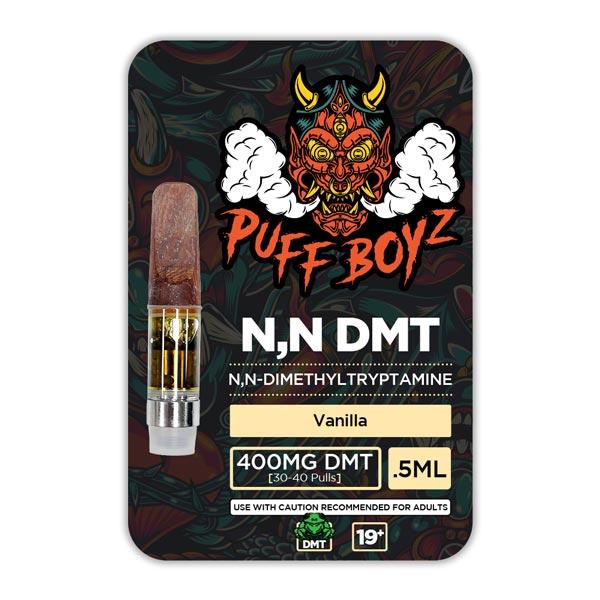
DMT Vapes and Other Unregulated Products
DMT vape products have become a prominent subject of online discussion.
However, products sold through unregulated markets present several concerns.
Consumers may not know:
- The exact chemical present
- The concentration
- Whether contaminants are present
- Whether the product has been correctly labeled
- Whether manufacturing standards were followed
A product marketed as DMT may potentially contain another substance entirely.
This creates additional risks beyond those associated with DMT itself.
Why Chemical Names Matter
A common mistake in online discussions is treating all psychedelic tryptamines as interchangeable.
For example:
N,N-DMT ≠ 5-MeO-DMT ≠ psilocin ≠ 4-HO-MET
Although these compounds share structural characteristics, their pharmacology and subjective effects can differ substantially.
Understanding the chemical name of a substance is therefore much more useful than relying on broad terms such as “DMT-type psychedelic.”
Frequently Asked Questions
What is the most common type of DMT?
When people refer simply to “DMT,” they generally mean N,N-dimethyltryptamine.
Is 5-MeO-DMT the same as DMT?
No. 5-MeO-DMT and N,N-DMT are chemically distinct compounds with different pharmacological and subjective profiles.
Is DMT found naturally?
Yes. DMT occurs naturally in numerous plants and has also been detected in some animals.
Does DMT produce hallucinations?
People frequently report intense visual and perceptual changes. The character and intensity of these experiences vary considerably between individuals.
How long does DMT last?
Rapidly absorbed DMT experiences are generally much shorter than experiences produced by many other classic psychedelics. Duration varies depending on the substance and circumstances.
Are DMT analogues safe?
Safety cannot be assumed simply because a compound is chemically related to DMT. Many analogues have limited human research, making their risks difficult to characterize.
Is DMT addictive?
DMT is not generally considered physically addictive in the same way as opioids or nicotine. Nevertheless, it can produce intense psychological effects and is not risk-free.
Is DMT legal?
Legal status varies by jurisdiction. In many countries, N,N-DMT is a controlled substance. Laws concerning analogues can be different, so current local legislation should always be consulted.
Final Thoughts
DMT is not a single category containing identical substances. N,N-DMT, 5-MeO-DMT, bufotenine, psilocin, and synthetic tryptamine analogues belong to a broader chemical family but can produce significantly different effects.
N,N-DMT is particularly associated with rapid and immersive psychedelic experiences, while 5-MeO-DMT is more commonly associated with profound alterations in self-awareness and consciousness. Bufotenine and numerous synthetic tryptamines have also attracted scientific and cultural interest, although research on many of these compounds remains limited.
The growing scientific interest in psychedelics provides an opportunity to better understand perception, consciousness, mental health, and the brain. At the same time, the limited evidence surrounding many newer tryptamines means that online claims should be treated cautiously.
Perhaps the most important distinction is between scientific research and recreational claims. A compound being naturally occurring, historically used, or investigated by researchers does not automatically make it safe.
As psychedelic science develops, researchers may learn more about how different tryptamines interact with the brain and why their subjective effects differ. Until that evidence is available, accurate information, awareness of legal restrictions, and recognition of potential psychological and physical risks remain essential.